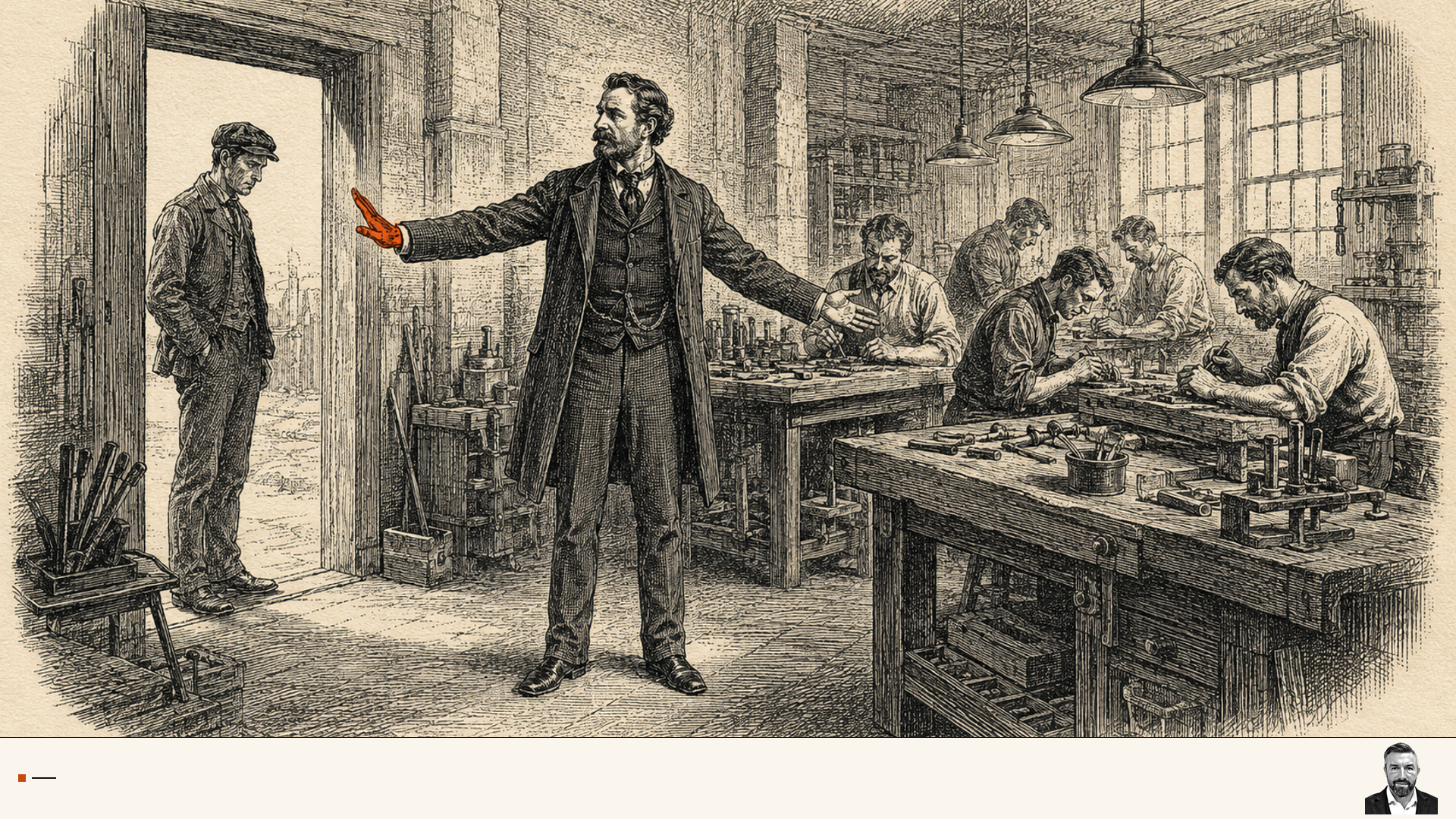
At a financial services SaaS provider, I inherited an employee who was friendly, good natured, and easy enough to like. He was also stalled on a major project, belligerent when help was offered, and prone to lashing out at colleagues when he got frustrated.
He was the hard category: not a cartoon villain or malicious enough to make the decision obvious from across the team, but harmful enough that everyone around him started paying the tax. I eventually let him go. He should have been let go before I got there.
That decision is what pietas means to me as a manager. Pietas is usually translated as duty, but duty does not quite carry the weight of it. It was not cold obedience, blind loyalty, or doing what someone above you said because authority demanded it. Pietas was ordered obligation: to family, country, gods, and the people depending on you.
That ancient idea maps cleanly onto management because leadership is never duty in one direction. You owe something to the struggling employee, the team, the business, the customers, and the organization that trusted you with authority. When those duties conflict, management stops being theory and leadership starts to cost you something.
Duty Is More Than Your Job Description
Duty is more than your set of obligations or your job description. It is protection correctly ordered.
That distinction matters. Some managers hear “accountability” and turn it into punishment. They mistake authority for force and make hard decisions quickly because quick feels decisive, even when the situation deserves more care. That is not duty. That is impulse wearing a manager title.
Other managers make the opposite mistake. They hear “compassion” and turn it into endless tolerance. They excuse behavior because someone is struggling. They delay a hard call because the person is nice, going through something, or trying their best. That can feel humane. It is often cowardice with better branding.
A manager who avoids a hard decision because it feels unkind is simply transferring the pain to everyone else. The team and customers absorb it, the business pays for it, and the next manager inherits it.
Duty is not about being harsh. It is about knowing what you are responsible to protect, and in what order: the person, the team, the business, the customers, and the future of the organization. Pietas refuses to pick one and pretend the others do not exist.
Nice Is Not The Same As Safe
Nice makes the decision harder because it gives the manager somewhere to hide. You can tell yourself the person means well. You can tell yourself they are just frustrated. You can tell yourself they are going through a tough time.
All of that might be true. None of it answers the management question. Most people have redeeming qualities. The question is whether their continued presence is helping or harming the system you are responsible to protect.
A likable person can still harm the team. Management requires holding both truths at once.
Help Has To Be Received
Struggling is not the problem. Good people hit walls, good engineers get stuck, and good teammates go through seasons where they need more support than usual. A manager should clarify expectations, remove blockers, offer pairing, adjust scope, coach, give direct feedback, and create a path back to solid ground.
The line is crossed when help is offered and rejected, frustration turns outward, and one person’s struggle becomes everyone else’s burden. Blaming colleagues, lashing out, refusing help, and stalling major work while the team absorbs the fallout are damage. When damage becomes a pattern, the manager has a duty to act, not because the person is beyond empathy, but because the duty to one person cannot erase the duty to the team.
The Team Will Tell You
Teams usually know before managers admit it. The signal shows up in the work, the mood, who volunteers to pair, who avoids certain stories, who stops speaking in meetings, and who quietly starts looking for another job.
In this case, I tracked points per developer day as a measure of team efficiency. It was not the whole truth, but it was useful. Every time this employee went on vacation, the number went up. The team became more efficient when one person was absent.
The strongest signal arrived when top performers told me they would not work with him anymore. Keeping him was no longer patience. It meant spending the credibility, energy, and goodwill of the people carrying the organization. That is misordered duty. Avoided decisions become inherited damage.
Avoided Decisions Compound
One person can damage more than a sprint. They can damage a team, trust in leadership, the willingness of good people to stay, and the organization’s belief that standards apply when enforcement is uncomfortable.
I have seen this pattern at a larger scale at a healthcare SaaS provider.
A startup had been acquired by the healthtech company and turned into a division. The division owned a SaaS product, and the product manager responsible for that product had a long pattern of changing direction, giving poor requirements, yelling at developers, and making it difficult for the team to finish meaningful work.
The developers escalated. They asked for help and for a different product manager.
The CTO’s answer was always some version of the same thing:
“They are doing their best and going through some things. Just work with them. Things will get better.”
Things did not get better. A product owner was hired to buffer the development team from the chaos, then left. Another product owner helped stabilize the team, then eventually left too because working with the same product manager became intolerable. The development team deteriorated, the product struggled, layoffs followed, and the division eventually closed. More than 50 people were affected. The person whose behavior had caused so much damage stayed.
Misordered compassion can feel kind in the moment because it avoids the immediate conflict, hard conversation, termination meeting, or escalation. The pain does not vanish. It spreads from the person who should be accountable to the people trying to make the organization function around them: the team, the product, the customers, the company, and eventually people who did nothing wrong who pay with their jobs.
Compassion Needs Boundaries
Compassion matters. If you manage people long enough, you will lead someone through grief, illness, burnout, divorce, anxiety, family crisis, financial pressure, and seasons where life outside work makes work harder. You should care, make room where you reasonably can, help people recover, and refuse to reduce a person to one bad quarter, rough project, or season of struggle.
Compassion without boundaries becomes negligence. The kind thing for one person can become the cruel thing for everyone else, and managers have to face that truth. You can be humane and still be firm, care about someone and still remove them from a role, feel the weight of the decision and still make it, and wish the situation were different while acting on the situation that exists.
Duty is not always gentle or easy. A manager does not get to protect personal comfort by calling inaction compassion. Put protection in the right order: the person where you can, the team when you must, the business from avoidable damage, the customers depending on the work, and the future employees who will inherit whatever you tolerate today. That is duty: protection correctly ordered.
Receipts
- Financial services SaaS provider: I inherited a friendly but harmful employee who lashed out at colleagues, resisted help, stalled a major project, and became a drag on team effectiveness.
- Team efficiency signal: Points per developer day rose every time that employee went on vacation, which showed the team became more effective when he was absent.
- Team protection signal: Top performers on the team told me they would not work with him anymore. That made the duty hierarchy clear.
- Healthcare SaaS provider: A product manager’s long pattern of direction changes, poor requirements, and developer conflict led to repeated buffering attempts, product owner turnover, team deterioration, layoffs, and eventual division closure.